What is a sublimation printer?
What is a Sublimation Printer?
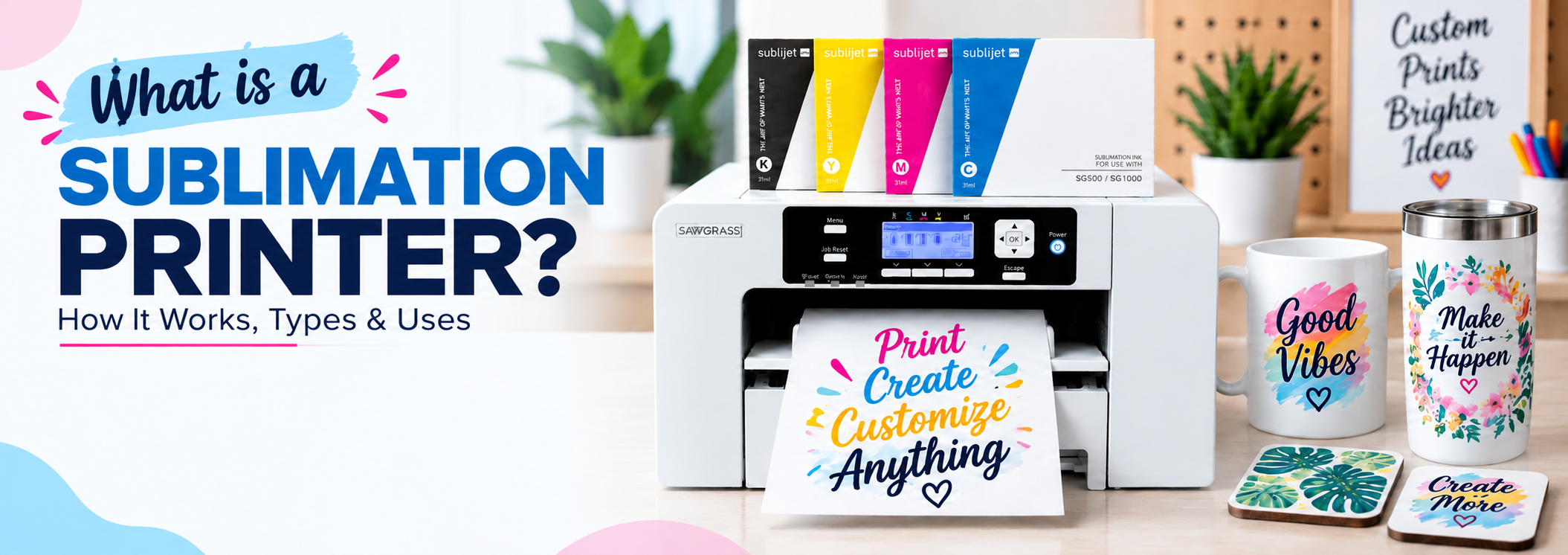
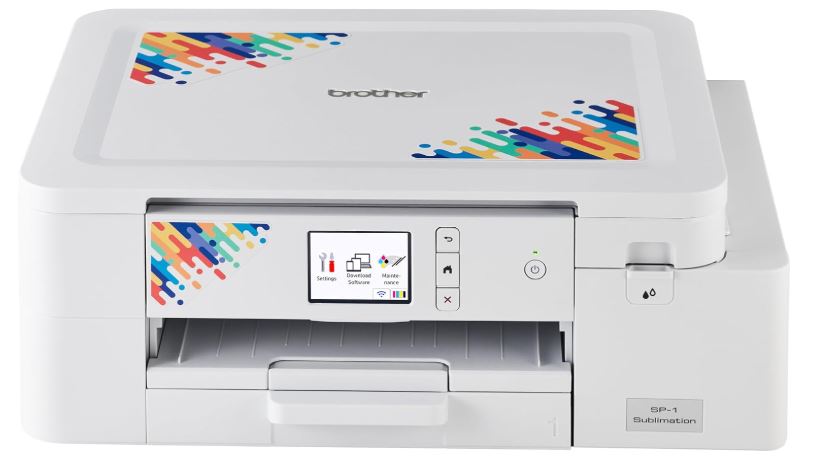
A sublimation printer is a type of printer used to transfer designs or images onto different types of materials, especially pure polyester or polyester-coated materials, with the help of transfer paper.
What Is a Sublimation Printer?
A sublimation printer is a type of printer used to transfer designs or images onto different types of materials, especially pure polyester or polyester-coated materials, with the help of transfer paper.
What Is Sublimation Printing?
Sublimation printing is a printing process in which dye sublimation ink is transferred from sublimation paper onto a suitable material using heat and pressure. The ink changes into a gas when heated and becomes part of the material.
How to Do Sublimation Printing?

For sublimation printing, first select the design that you want to print on a T-shirt, ceramic mug, cloth, fabric, or another suitable material.
Take sublimation transfer paper and place it in the sublimation printer to print the design. When the print is completed, take the paper out carefully and allow the ink to dry according to the manufacturer’s instructions.
After that, trim the unwanted white areas if necessary and place the printed image correctly on the material that is going to be printed.
Place the material in a heat press and apply the required temperature, pressure, and time. The heat changes the sublimation ink into a gas, allowing it to transfer into the polyester fibers or polyester coating.
After the transfer is complete, remove the material carefully and allow it to cool.
Does Sublimation Need Special Paper?
Yes, sublimation needs special paper, also called sublimation paper or transfer paper. The image is printed on this paper first and then transferred to the desired material using heat and pressure.
What Is Sublimation Used For?
Sublimation is used to convert dye sublimation ink into a gaseous form without passing through a liquid state. The vaporized ink enters the polyester fibers or polyester coating during the heating process. When the material cools, the ink becomes solid again and remains within the material.
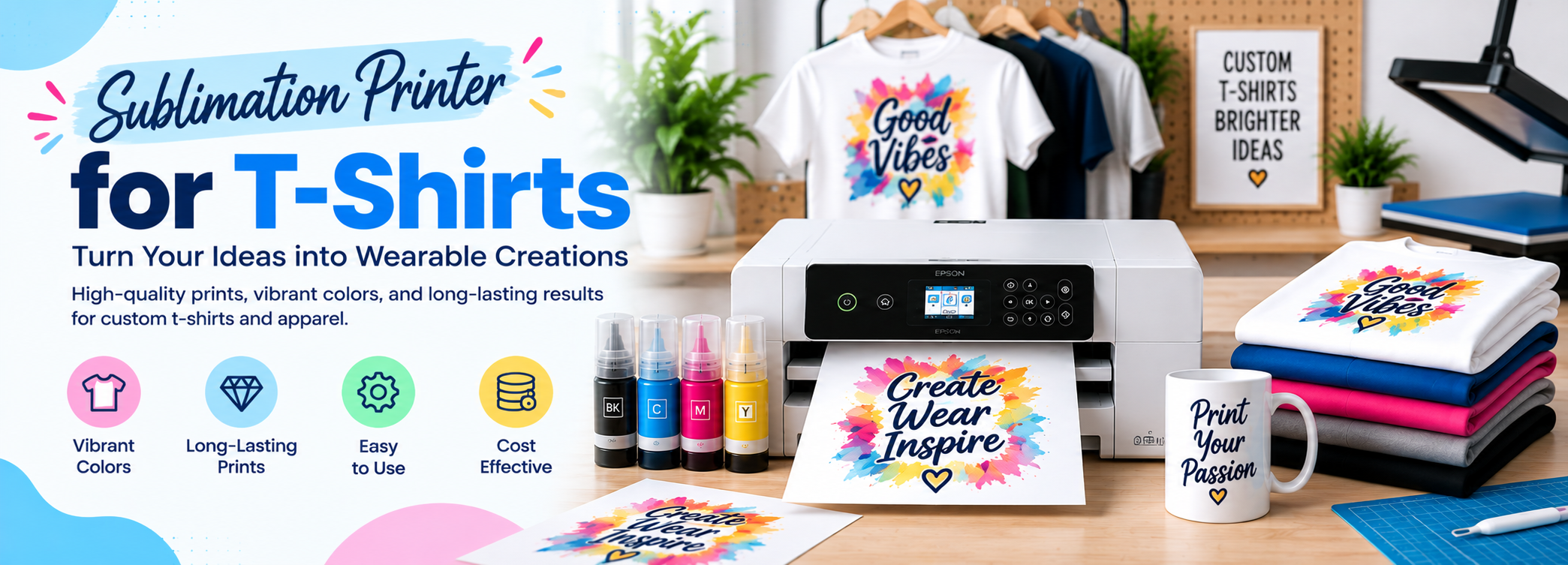
Sublimation printing is commonly used for T-shirts, sportswear, mugs, tumblers, mouse pads, aluminum panels, signs, awards, and other polyester-coated products.
Types of Sublimation Printers
Here are some common sublimation printers and printing systems:
- Sawgrass Virtuoso SG500
- Sawgrass Virtuoso SG1000
- Sawgrass Virtuoso VJ628
- Epson SureColor F170
- HP Stitch S500
- Epson SureColor F570
- Mimaki TS100
- Canon PIXMA Pro-100
- Brother MFC-J995DW
1. Dye Sublimation Printer
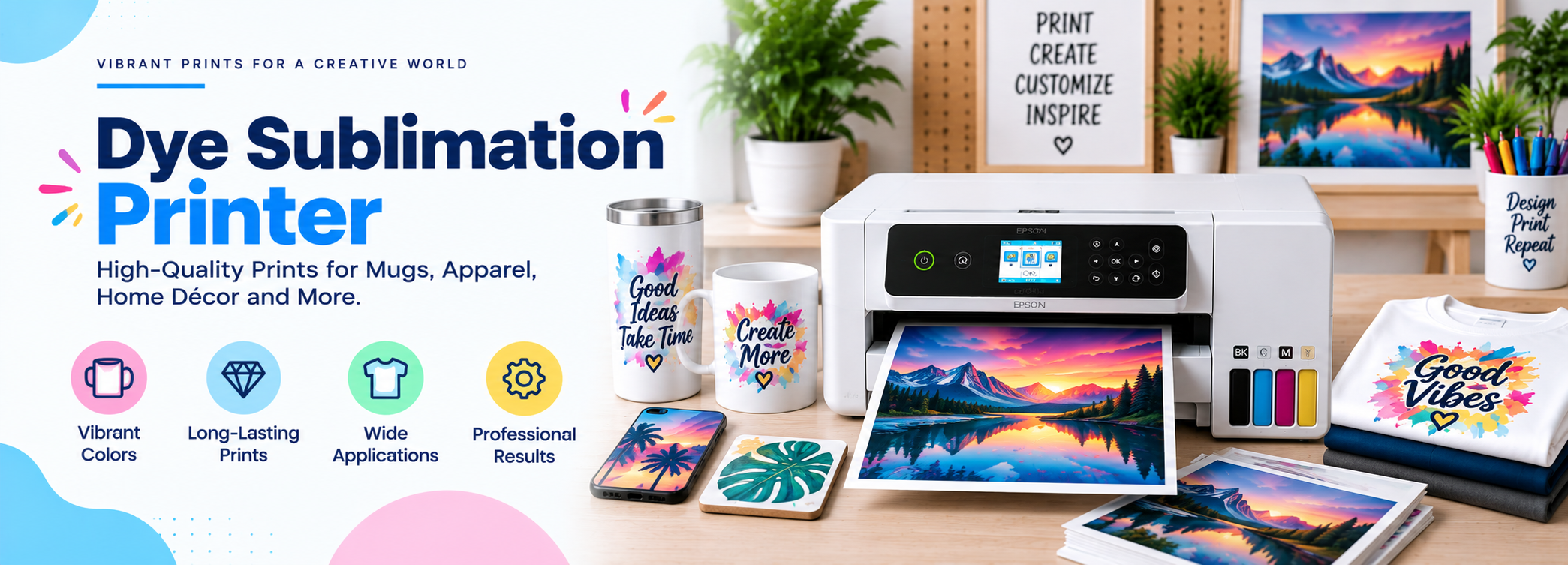
A dye sublimation printer is used to create printed products by transferring dye sublimation ink to suitable materials with heat and pressure.
The materials commonly used with this type of printing include sublimation transfer paper, dye sublimation ink, and polyester or polyester-coated products.
Dye sublimation is used by professionals, small businesses, print shops, and people making customized products. One reason for its popularity is that the ink becomes part of the suitable material instead of sitting as a separate layer on the surface.
Dye sublimation can be used for fabrics, mugs, bottles, aluminum, and other products that have a suitable polyester coating.
Here are some common types of dye sublimation heat presses and printing equipment.
Clam Press Dye Sublimation Printer
A clam press dye sublimation heat press is commonly used for T-shirts and other flat garments.
This type of press is popular because it is relatively simple to operate and works well for small businesses and home-based printing. It can be used to transfer designs onto suitable polyester garments and other flat substrates.
Swing-Away Dye Sublimation Printer
A swing-away heat press can be used for both soft and hard materials, depending on the model and attachment.
The upper platen swings away from the lower platen, giving the operator more space to position the product. It can be used with products such as garments, ceramic mugs, metal panels, and other suitable sublimation blanks when the correct setup is used.
Calendar Press Dye Sublimation Printer
There are two common types of calendar press systems:
- Electric
- Oil drum
Electric
The electric method is useful for smaller production operations. It is easier to operate and can heat the machine quickly. It can be used for continuous production of sublimated materials.
Oil Drum
The oil drum method can take more time to heat and cool, but it is used in larger production environments where consistent heat and pressure are required.
Flatbed Press Dye Sublimation Printer
A flatbed heat press is a machine in which the material is placed on a flat working surface before the transfer is applied.
There are two common methods of operating a flatbed press:
- Pneumatic printing
- Manual printing
Pneumatic
A pneumatic heat press uses air pressure to operate the press. It requires less manual force from the operator and can provide consistent pressure during production.
Manual
A manual heat press requires the operator to control the pressing process. It is commonly used by individuals, hobbyists, and small businesses.
3D Vacuum Heat Press Dye Sublimation Printer
A 3D vacuum heat press is designed for products with curved or irregular surfaces.
This type of equipment makes it possible to transfer designs onto products that cannot be placed easily in a standard flat heat press. It can be used for products such as phone cases, plates, and other specially designed sublimation blanks.
Single-Station Dye Sublimation Press
Single-station presses are designed to perform one type of pressing task at a time.
For example, a mug press can be used repeatedly for sublimating coffee mugs. Different attachments can be available for different products depending on the machine.
2. Sawgrass Virtuoso SG500 Sublimation Printer

The Sawgrass Virtuoso SG500 produces detailed and bright prints for sublimation projects. It is designed as a dedicated sublimation printing system and is suitable for small businesses, home businesses, and people making customized products.
The SG500 supports paper sizes up to 8.5 × 14 inches through its standard paper handling, while its bypass tray can accommodate larger media depending on the setup.
3. Sawgrass Virtuoso SG1000 Sublimation Printer

The Sawgrass Virtuoso SG1000 can be used for a wide range of sublimation products, including mugs, glassware, apparel, and other suitable substrates.
It supports larger paper sizes than the SG500. The standard tray can handle up to 11 × 17-inch paper, while the bypass tray can accommodate larger media up to 13 × 19 inches.
What Are the Two Versions of the SG500 and SG1000?
The SG500 and SG1000 are available in different regional versions.
The North American versions use 110V power, while European versions use 220V power. The paper-handling features can also vary between regional models.
4. Sawgrass Virtuoso VJ628 Sublimation Printer

The Virtuoso VJ628 is a larger-format sublimation printer designed for professional printing applications.
It uses SubliJet-HD sublimation inks and is designed to produce sharp and vibrant colors for customized products.
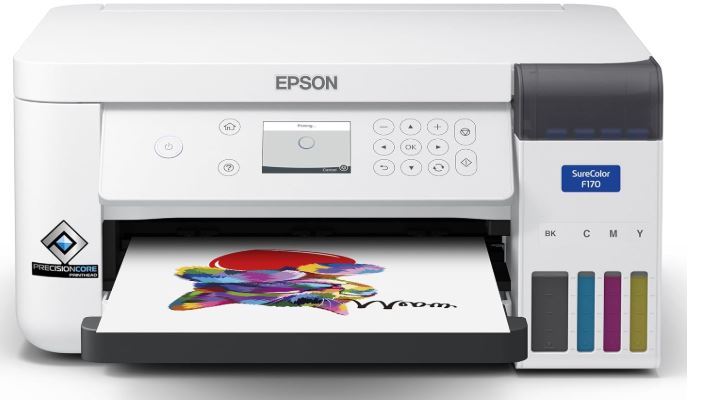
5. Epson SureColor F170 Sublimation Printer

The Epson SureColor F170 is designed for smaller sublimation projects and can be used for products such as mugs, mouse pads, awards, and other suitable sublimation blanks.
It uses Epson PrecisionCore technology and is designed specifically for dye sublimation printing.
6. HP Stitch S500 Sublimation Printer

The HP Stitch S500 is a large-format dye sublimation printer designed for professional printing applications.
It is intended for businesses that require larger print widths and higher production capacity than a small desktop sublimation printer.
7. Epson SureColor F570 Pro Sublimation Printer
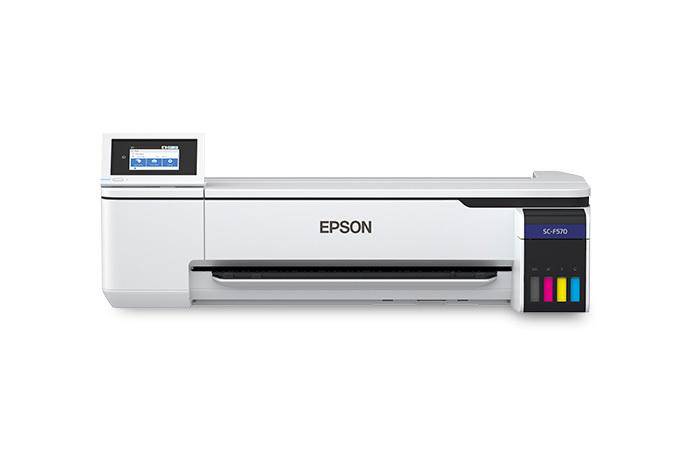
The Epson SureColor F570 Pro is designed for professional dye sublimation printing.
It can print on media up to 24 inches wide and is suitable for larger apparel, signage, soft signage, and other sublimation applications.
8. Mimaki TS100 Sublimation Printer

The Mimaki TS100 is a large-format dye sublimation printer designed for textile and other sublimation applications.
It can be used for businesses that need larger printing capacity than a standard desktop sublimation printer.
9. Canon PIXMA Pro-100 Sublimation Printer
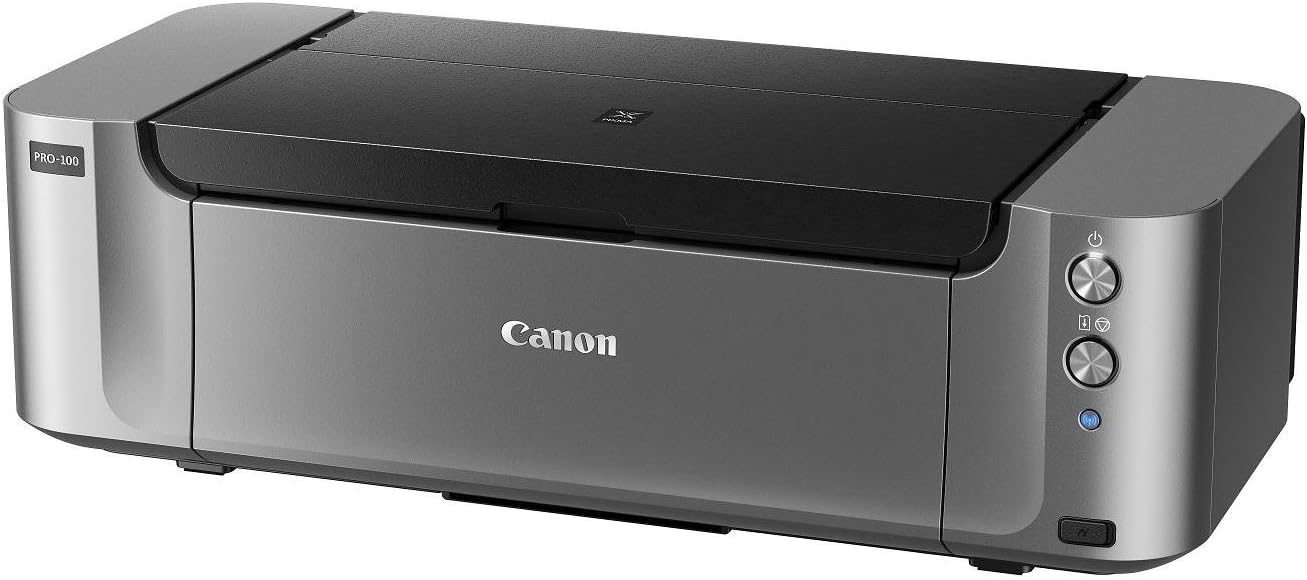
The Canon PIXMA Pro-100 is a photo printer rather than a dedicated sublimation printer.
It uses eight dye-based ink colors, including black, gray, light gray, yellow, magenta, photo magenta, cyan, and photo cyan.
A printer such as this should not automatically be treated as a sublimation printer simply because it can produce high-quality color prints.
10. Brother MFC-J995DW Sublimation Printer

The Brother MFC-J995DW is an inkjet printer designed primarily for everyday printing.
It has been used by some people for conversion projects, but it was not originally designed as a dedicated sublimation printer. Printer conversion should always be checked for compatibility before replacing the original ink with sublimation ink.
Types of Materials That Can Be Sublimated
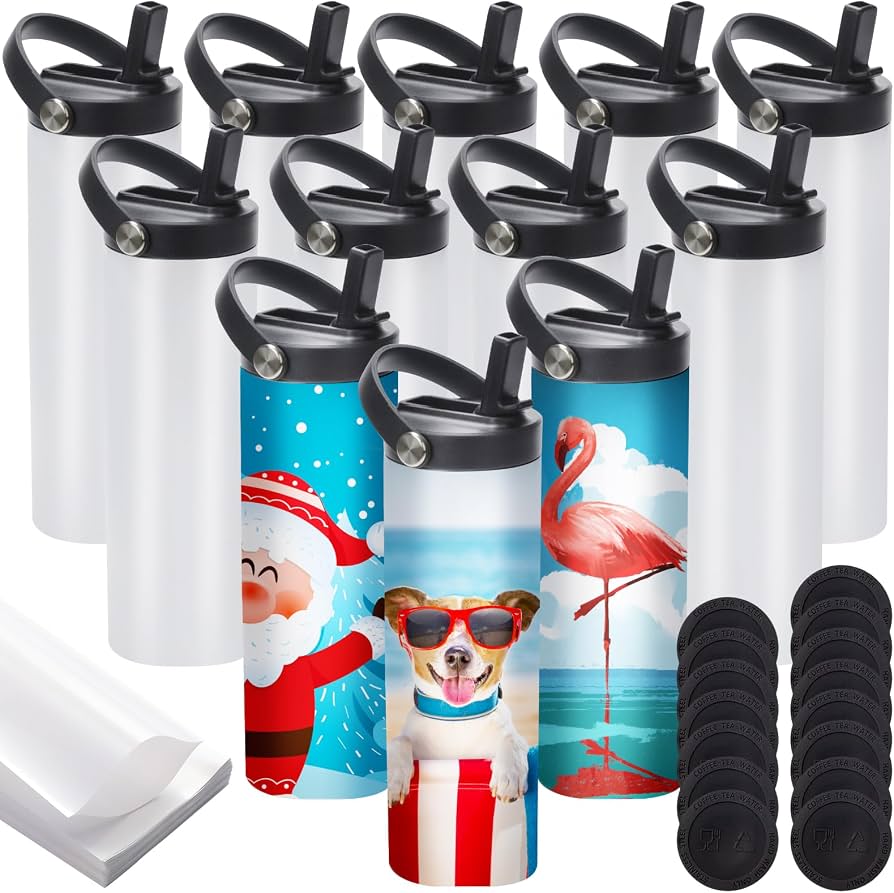
Sublimation printing can be used on suitable:
- Fabrics
- Glass products with suitable coatings
- Aluminum and other coated metals
- Specially coated wood products
- Ceramic mugs with sublimation coating
Dye Sublimation on Fabric
Fabric is one of the most common materials used for sublimation printing.
Sublimation works best on polyester and polyester-blend fabrics with a sufficiently high polyester content. Natural fabrics such as cotton are not suitable for standard dye sublimation because the dye does not bond to cotton fibers in the same way it bonds to polyester.
T-shirts, sportswear, flags, blankets, and other polyester products are commonly used for sublimation.
Dye Sublimation on Glass
Sublimation printing on glass requires a product with a suitable sublimation coating.
Heat-resistant glass products can be used for sublimation when they are specifically prepared for the process. For curved glass products, a suitable mug press or other heating equipment can be used depending on the product.
Dye Sublimation on Metal
Aluminum is one of the most common metals used for sublimation printing.
The design is printed onto sublimation paper and then transferred to a specially coated aluminum sheet using heat and pressure.
The aluminum must have a suitable sublimation coating. Regular uncoated metal will not provide the same result.
Dye Sublimation on Wood
Sublimation can be used on specially coated wood products.
Uncoated wood is porous and does not provide the same surface needed for standard sublimation. Light-colored, polyester-coated wood products generally produce better results.
Dark-colored wood can also affect the appearance of the design because standard sublimation does not print white ink.
Dye Sublimation on Mugs
For mug sublimation, the ceramic mug must have a suitable polyester coating.
Regular ceramic mugs without a sublimation coating will not produce a proper sublimation transfer.
Mugs are popular sublimation products because they can be customized with photographs, logos, names, artwork, and other designs.
Does Sublimation Work on Cotton?
Standard dye sublimation does not work well directly on cotton.
Cotton is a natural fiber, and sublimation dye is designed to bond with polyester fibers. A sublimation print placed directly onto cotton will generally have poor durability and can fade after washing.
For standard sublimation printing, pure polyester or a suitable polyester blend is a better option.
What Are the Uses of Sublimation Printers?
Sublimation printers are commonly used when a person wants to create customized products such as:
- T-shirts
- Sports jerseys
- Mugs
- Tumblers
- Mouse pads
- Phone cases
- Aluminum signs
- Awards
- Blankets
- Bags
- Flags
- Other polyester products
Sublimation printing is also used by home businesses, print shops, online sellers, and businesses that make personalized products.
The process can be relatively simple when the printer, sublimation paper, ink, heat press, and blank material are compatible with one another.
Advantages and Disadvantages of Sublimation Printing
After looking at the printing process, it is also useful to consider its advantages and disadvantages.
Advantages
1. Print Colors
One of the useful features of sublimation printing is its ability to produce bright, detailed, and colorful designs on suitable materials.
2. Durability of Prints
During sublimation, the dye becomes part of the polyester material or coating. The design does not sit as a separate layer on top of the material.
This can provide good durability when the correct material, ink, temperature, pressure, and pressing time are used.
3. Economical for Certain Applications
Sublimation can be economical for small businesses and custom-product sellers, particularly when producing small batches or individual personalized products.
The cost depends on the printer, sublimation ink, paper, heat press, blanks, and the amount of material being printed.
4. Wide Range of Uses
Sublimation printing can be used for many products, including clothing, mugs, tumblers, aluminum panels, mouse pads, bags, and other specially prepared products.
Disadvantages
1. Material Restrictions
Sublimation printers have material restrictions.
- Standard sublimation works best on polyester and polyester-coated products.
- Natural fabrics such as cotton are not suitable for standard sublimation.
- Hard products generally need a suitable sublimation coating.
2. Color Limitations
Standard sublimation printing works best on white or light-colored materials.
Sublimation printers normally do not use white ink. Because of this, a white area in the design usually appears as the color of the blank material.
Dark or black garments are therefore not suitable for standard sublimation printing.
3. UV Exposure
Continuous exposure to direct sunlight can affect sublimation prints over time.
Products that will remain outdoors or under strong sunlight need to be selected carefully because UV exposure can cause colors to fade.
What Is the Difference Between a Sublimation Printer and a Regular Printer?
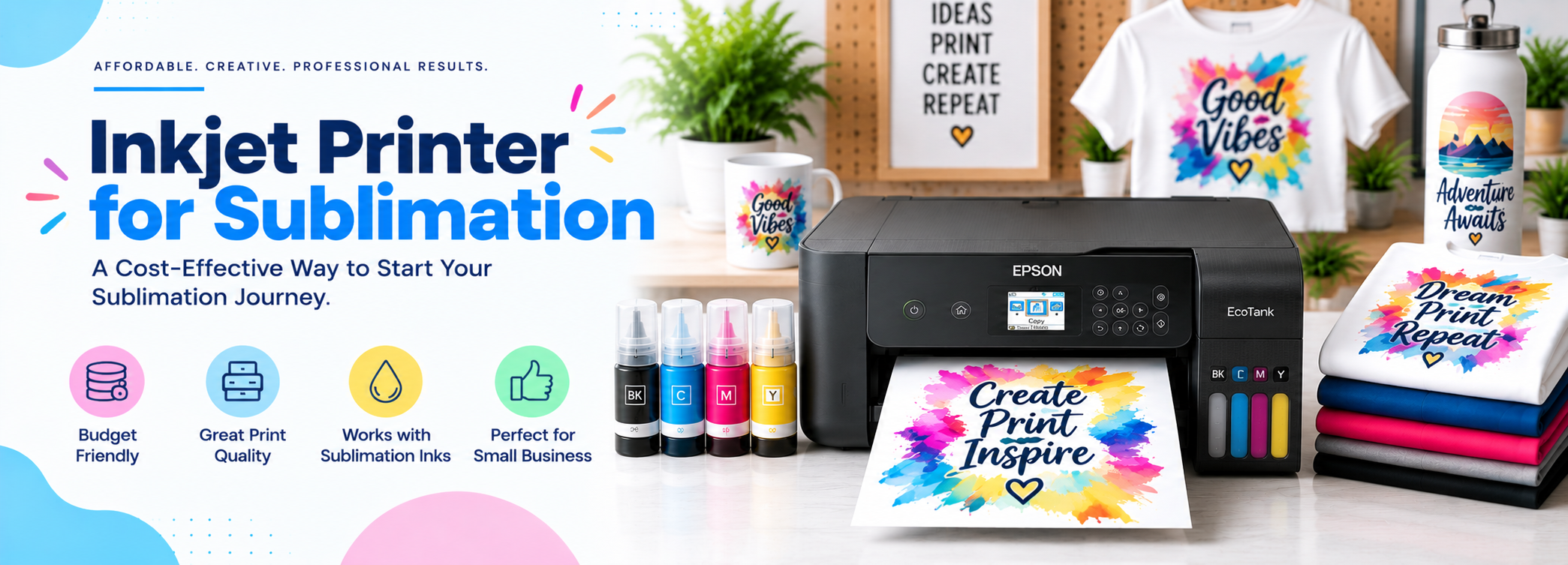
The main differences include the type of ink, printing process, materials, and final application.
Printing Method
A regular printer is generally designed to print documents, spreadsheets, photographs, labels, and other media directly onto paper or other supported materials.
A sublimation printer prints a design onto sublimation paper first. The design is then transferred to a suitable product using heat and pressure.
Ink
Regular inkjet printers use standard ink formulated for their particular printing system.
Sublimation printers use dye sublimation ink that is designed to transfer into polyester materials or polyester coatings when heated.
Printing Capability
Regular printers generally print directly onto paper, photo paper, sticker paper, and other supported media.
Sublimation printers print the design onto sublimation paper, which is then used to transfer the design onto a suitable substrate.
Colors
Both types of printers can produce a wide range of colors.
Sublimation printing can produce bright and detailed colors on suitable white or light-colored polyester materials.
Which Printer Is Needed for Sublimation?
A dedicated sublimation printer is the simplest option for sublimation printing.

Some compatible inkjet printers can also be converted for sublimation by replacing their regular ink with compatible dye sublimation ink. However, not every inkjet printer is suitable for conversion.
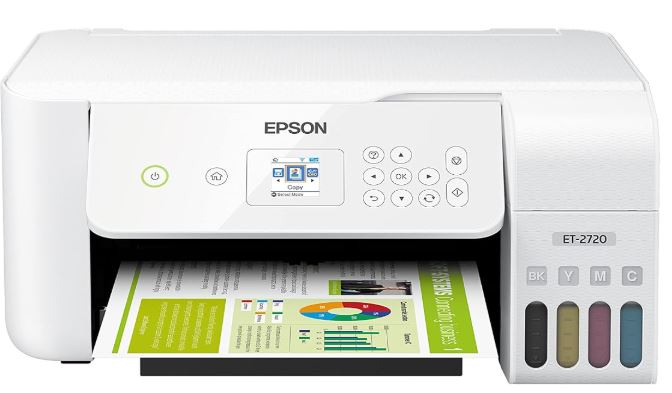
Epson EcoTank models have commonly been used for conversion projects because of their refillable ink tanks and compatible printhead technology.
Models such as the Epson EcoTank ET-2800, ET-2803, ET-15000, and other compatible models have been used for this purpose.
Before converting any printer, check the manufacturer’s specifications and the sublimation ink supplier’s compatibility information.
Can I Use a Regular Printer for Sublimation?
Not every regular printer can be used for sublimation.

The printer must have a printhead and ink delivery system that are compatible with sublimation ink. A printer designed for standard ink should not be filled with sublimation ink unless the printer is confirmed to be suitable for conversion.
Many HP inkjet printers use thermal inkjet technology and are not suitable for standard sublimation conversion.
Epson printers with Micro Piezo technology have commonly been used for sublimation conversion.
The original ink must also be completely replaced according to the conversion process, and the printer should be used only with compatible sublimation ink after conversion.
Which Is Better: Sublimation or Digital Printing?
Both sublimation and other forms of digital printing have their own applications.
1. Printing Method
Sublimation transfers dye into polyester fibers or a suitable coating.
Other digital printing methods can place ink or another printable layer directly onto the surface of the material.
2. Durability
Sublimation prints can have good durability because the dye becomes part of the polyester material.
The durability of digital printing depends on the specific printing method, ink, material, and finishing process.
3. Ink
Standard sublimation uses dye sublimation ink and works best on white or light-colored polyester materials.
Some other digital printing methods can use white ink, making it possible to print designs on dark-colored materials.
4. Image Quality
Both methods can produce high-quality images when the correct printer, ink, material, and settings are used.
Sublimation is particularly useful for detailed, full-color designs on polyester garments and coated products.
Frequently Asked Questions
Is a Photo Printer a Sublimation Printer?
No, a photo printer is not automatically a sublimation printer.
Photo printers are designed to produce photographs and other images using their specified ink system.
For sublimation printing, you need a dedicated sublimation printer or a printer that has been confirmed as compatible with sublimation ink and the required sublimation process.
What Is the Best Sublimation Printer for Shirts?
Several printers can be used for T-shirt sublimation, depending on the size of the designs, production volume, and budget.
Common options include:
- Sawgrass SG500
- Sawgrass SG1000
- Epson SureColor F170
- Epson SureColor F570
- Epson EcoTank ET-2800
- Epson EcoTank ET-2803
- Epson EcoTank ET-15000
- Epson EcoTank ET-8550
For a small home business, a compact printer can be sufficient. For larger designs and higher production volume, a larger-format printer can be more suitable.
How to Do Sublimation Printing at Home?
You can do sublimation printing at home with the right equipment.
You will need:
- A sublimation printer or compatible converted printer
- Dye sublimation ink
- Sublimation paper
- A heat press
- Suitable polyester or polyester-coated blanks
- Design software
First, create or select the design. Print it onto sublimation paper using the correct sublimation settings.
Place the printed transfer onto the blank product and secure it properly.
Use the recommended temperature, pressure, and pressing time for the specific material.
After pressing, carefully remove the transfer and allow the product to cool.
Can an HP Printer Be Used for Sublimation?
Some HP printers are designed specifically for dye sublimation, such as the HP Stitch series.
However, most standard HP inkjet printers are not suitable for sublimation conversion because many use thermal inkjet printhead technology.
HP Stitch printers are professional large-format machines designed for textile and dye sublimation applications.
A standard HP inkjet printer should not be filled with sublimation ink unless the exact model is confirmed as compatible.
Can Canon Printers Be Used for Sublimation?
Some Canon printers have been used in conversion projects, but Canon does not make every inkjet printer suitable for sublimation.
The printer’s printhead technology and ink system must be compatible with sublimation ink.
Do not simply replace the original cartridges with sublimation ink. Check the exact Canon model and the sublimation ink manufacturer’s compatibility information first.
Can All Epson Printers Be Used for Sublimation?
No, not all Epson printers can be used for sublimation.
Epson has both regular printers and dedicated sublimation printers. Some Epson EcoTank and other compatible models have been used for conversion, while other models are not suitable.
Epson’s dedicated SureColor sublimation printers are designed specifically for sublimation printing.
Some Epson EcoTank models that have been used for sublimation conversion include:
- ET-2400
- ET-2800
- ET-2803
- ET-2850
- ET-3830
- ET-3850
- ET-4800
- ET-4850
- ET-5150
- ET-5170
- ET-5180
- ET-5800
- ET-5850
- ET-5880
- ET-8500
- ET-8550
- ET-15000
- ET-16600
- ET-16650
Always verify the exact model and current compatibility before buying a printer for conversion.
Which Epson Is Best for Sublimation?
For people looking for a dedicated Epson sublimation printer, the Epson SureColor F170 is a strong option for smaller projects, while the Epson SureColor F570 Pro is designed for larger and more demanding production.
Some Epson EcoTank models, including the ET-2800, ET-2803, and ET-15000, have also been used for sublimation conversion.
The right model depends on the required print size, production volume, budget, and whether you want a dedicated sublimation printer or a converted printer.
How Long Does Sublimation Ink Last?
Sublimation ink can remain usable for a considerable period when it is stored correctly and the printer is maintained properly.
The ink should be kept according to the manufacturer’s storage instructions and protected from conditions that can affect its quality.
Regular printer use can also help prevent ink from drying or causing problems in the printhead.
Once the sublimation ink has been transferred correctly to polyester, the design can be durable and resistant to normal washing.
Avoid harsh washing conditions and bleach when caring for sublimated garments.
What Is the Best Sublimation Printer for a Beginner?
A beginner generally needs a printer that is easy to operate, affordable to maintain, and suitable for the type of products they plan to make.
Some options include:
- Sawgrass SG500
- Epson SureColor F170
- Epson EcoTank ET-2800
- Epson EcoTank ET-2803
- Epson EcoTank ET-15000
- Sawgrass SG1000
- Epson SureColor F570 Pro
For someone starting with mugs, small T-shirts, mouse pads, and similar products, a compact printer can be sufficient.
For larger T-shirts, bigger designs, or higher production volume, a larger printer may be a better fit.
Is a Laser Printer the Same as a Sublimation Printer?
No, a laser printer and a sublimation printer are different types of printing systems.
A laser printer is mainly designed for documents, graphics, labels, and other media using toner.
A sublimation printer uses dye sublimation ink and transfers the design onto a suitable polyester material or coated product using heat.
Laser printers can be faster for document printing, while sublimation printers are designed for transferring designs to specific products.
Is Inkjet or Laser Printer Better for Sublimation?
For standard dye sublimation, a compatible inkjet printer is generally the practical option.
Laser printers use toner rather than dye sublimation ink, so they are not normally used for standard dye sublimation printing.
A compatible inkjet printer can print dye sublimation ink onto sublimation paper, which is then transferred to the final product using a heat press.
If you are starting a small sublimation business, a dedicated sublimation printer or a compatible converted inkjet printer is generally more suitable than a laser printer.
What Type of Printers Are Best for Sublimation?
The best printers for standard dye sublimation are printers designed specifically for sublimation or compatible inkjet printers that can use dye sublimation ink.
Dedicated sublimation printers include models such as:
- Epson SureColor F170
- Epson SureColor F570 Pro
- Sawgrass SG500
- Sawgrass SG1000
- Mimaki TS100
For conversion projects, compatible Epson EcoTank models are commonly used.
The printer should be selected according to the required print width, production volume, material type, maintenance requirements, and overall budget.
Do All Printers Work With Sublimation?
No, all printers do not work with sublimation.
A printer needs to be compatible with dye sublimation ink and the sublimation process.
Dedicated sublimation printers are already designed for this purpose.
Some compatible inkjet printers can be converted, but conversion is not suitable for every model.
Printers That May Be Converted
Some compatible printers include:
- Compatible inkjet printers
- Compatible Epson EcoTank printers
- Certain other printer models confirmed by the ink manufacturer
Printers That Should Not Be Converted
Dedicated sublimation printers such as the following are already designed for sublimation and do not need conversion:
- Sawgrass SG500
- Sawgrass SG1000
- Epson SureColor F170
- Epson SureColor F570 Pro
What Is the Best Sublimation Printer for a Business?
The best sublimation printer for a business depends on the products being sold, expected order volume, print size, and available budget.
For smaller businesses and home-based operations, options such as the Epson SureColor F170, Sawgrass SG500, or a compatible Epson EcoTank conversion may be suitable.
For businesses that need larger print sizes and higher production capacity, options such as the Sawgrass SG1000, Epson SureColor F570 Pro, or larger-format professional machines can be considered.
Popular Options for Small Businesses
- Epson EcoTank ET-2800
- Epson EcoTank ET-4800
- Sawgrass SG500
Epson SureColor F170
Heat Transfer Printing
Heat transfer printing can involve printing a design onto transfer material and then applying that material to a garment or other substrate with a heat press.
Depending on the transfer method, the printed design can remain as a layer on the surface of the material.
Sublimation Printing
In sublimation printing, the design is printed onto sublimation paper and transferred to polyester or a suitable polyester coating using heat and pressure.
The dye becomes part of the polyester material or coating.
What Is the Difference Between a Sublimation Printer and a Heat Press Printer?
A sublimation printer and a heat press perform two different jobs.
A sublimation printer prints the design onto sublimation paper.
A heat press applies heat and pressure to transfer that printed design from the paper to the suitable product.
You normally need both pieces of equipment for a standard sublimation setup.
Difference in Durability
Sublimation prints can be highly durable on suitable polyester materials because the dye becomes part of the fibers.
Heat transfer products can also be durable, but the lifespan depends on the transfer material, application method, garment, washing conditions, and quality of the product.
Difference in Substrates
Sublimation works best with white or light-colored polyester products and specially coated hard substrates.
Heat transfer methods can work with a wider range of garment colors and materials, depending on the specific transfer technology.
Similarity in Print Colors
Both methods can produce colorful and detailed designs when the correct equipment and materials are used.
The main difference is how the design becomes attached to the final product.
Is Sublimation Printing Better Than Heat Transfer?
Sublimation can be a better option when you are printing full-color designs on white or light-colored polyester garments and want the design to become part of the fabric.
Heat transfer can be more suitable when you need to print on cotton, dark garments, or a wider range of materials.
The better method depends on the product, garment color, fabric type, design, production volume, and required durability.
Frequently Asked Questions About Sublimation Printing
Can sublimation printing be done at home?
Yes. A home sublimation setup can include a sublimation printer, sublimation ink, sublimation paper, heat press, suitable blanks, and design software.
Can I sublimate on a cotton T-shirt?
Standard dye sublimation is not suitable for printing directly onto cotton. Polyester or a suitable polyester-blend garment is a better option.
Do I need a heat press for sublimation?
Yes. A heat press is normally required to transfer the sublimation design from the paper to the polyester material or coated product.
Can I use regular printer paper for sublimation?
No. Standard printer paper is not designed for sublimation transfers. Sublimation paper is made to hold the dye sublimation ink and release it during the heat-transfer process.
Can sublimation print on black shirts?
Standard sublimation does not work well on black shirts because sublimation printers do not normally print white ink. White or light-colored polyester shirts are generally used.
Can I sublimate on mugs?
Yes, but the mug needs a suitable sublimation coating. Regular ceramic mugs without the correct coating will not produce a proper sublimation transfer.
Is sublimation printing permanent?
Sublimation prints can be very durable on suitable polyester materials. The dye becomes part of the polyester fibers rather than forming a separate layer on the surface.
Is sublimation cheaper than screen printing?
The cost depends on the order size, equipment, ink, paper, blanks, labor, and design. Sublimation can be convenient for small orders and personalized products, while other printing methods can make more sense for larger production runs.
How long do sublimation prints last?
A properly applied sublimation print on suitable polyester can last for a long time with normal use and washing. Care instructions, fabric quality, UV exposure, and pressing conditions all affect durability.
What is the easiest sublimation printer for beginners?
The Epson SureColor F170 and Sawgrass SG500 are two options commonly considered for smaller sublimation setups. A compatible Epson EcoTank can also be considered if you are comfortable with printer conversion and maintenance.
Which Sublimation Printer Should You Buy?
The right printer depends on what you plan to print and how much you expect to produce.
If you are starting at home and mainly want to make mugs, mouse pads, small T-shirts, and personalized products, the Epson SureColor F170 is a practical dedicated sublimation printer to consider. It avoids the conversion process and is designed specifically for sublimation.
If you want a simple setup with a compact printer and do not mind spending more on a dedicated system, the Sawgrass SG500 is another strong option for smaller products and businesses.
If your work includes larger T-shirt designs, bigger transfer sheets, or higher production requirements, the Sawgrass SG1000 or Epson SureColor F570 Pro makes more sense because they support larger media and are built for heavier sublimation workloads.
For someone who wants to keep the initial printer cost lower and is comfortable with printer conversion, ink management, and maintenance, a compatible Epson EcoTank such as the ET-2800 or ET-15000 can be considered. The ET-2800 is better suited to smaller work, while the ET-15000 gives you more flexibility when you need larger prints.
Your budget should not be the only factor. Think about the size of the designs you will print, number of orders, type of blanks, ink cost, paper cost, maintenance, and how much time you want to spend managing the printer. A cheaper converted printer may save money at the beginning, but a dedicated sublimation printer can make the setup simpler. For a small home business, the Epson SureColor F170 or Sawgrass SG500 are sensible starting points; for larger designs and growing production, move toward the Sawgrass SG1000 or Epson SureColor F570 Pro.
Table of Contents
- What Is a Sublimation Printer?
- What Is Sublimation Printing?
- How to Do Sublimation Printing?
- Does Sublimation Need Special Paper?
- What Is Sublimation Used For?
- Types of Sublimation Printers
- Types of Materials That Can Be Sublimated
- What Are the Uses of Sublimation Printers?
- Advantages and Disadvantages of Sublimation Printing
- What Is the Difference Between a Sublimation Printer and a Regular Printer?
- Which Printer Is Needed for Sublimation?
- Can I Use a Regular Printer for Sublimation?
- Which Is Better: Sublimation or Digital Printing?
💡 Quick Takeaways
- Uses sublimation ink that turns into a gas and bonds into the material under heat
- Works best on polyester or polyester-coated materials
- Dye becomes part of the material rather than sitting on top, which can provide good durability
- Requires a heat press to complete the transfer
- Used for clothing, mugs, tumblers, and many other custom products
New to Sublimation Printing?
See our picks for the best sublimation printers on the market today.
Best Sublimation Printers →